
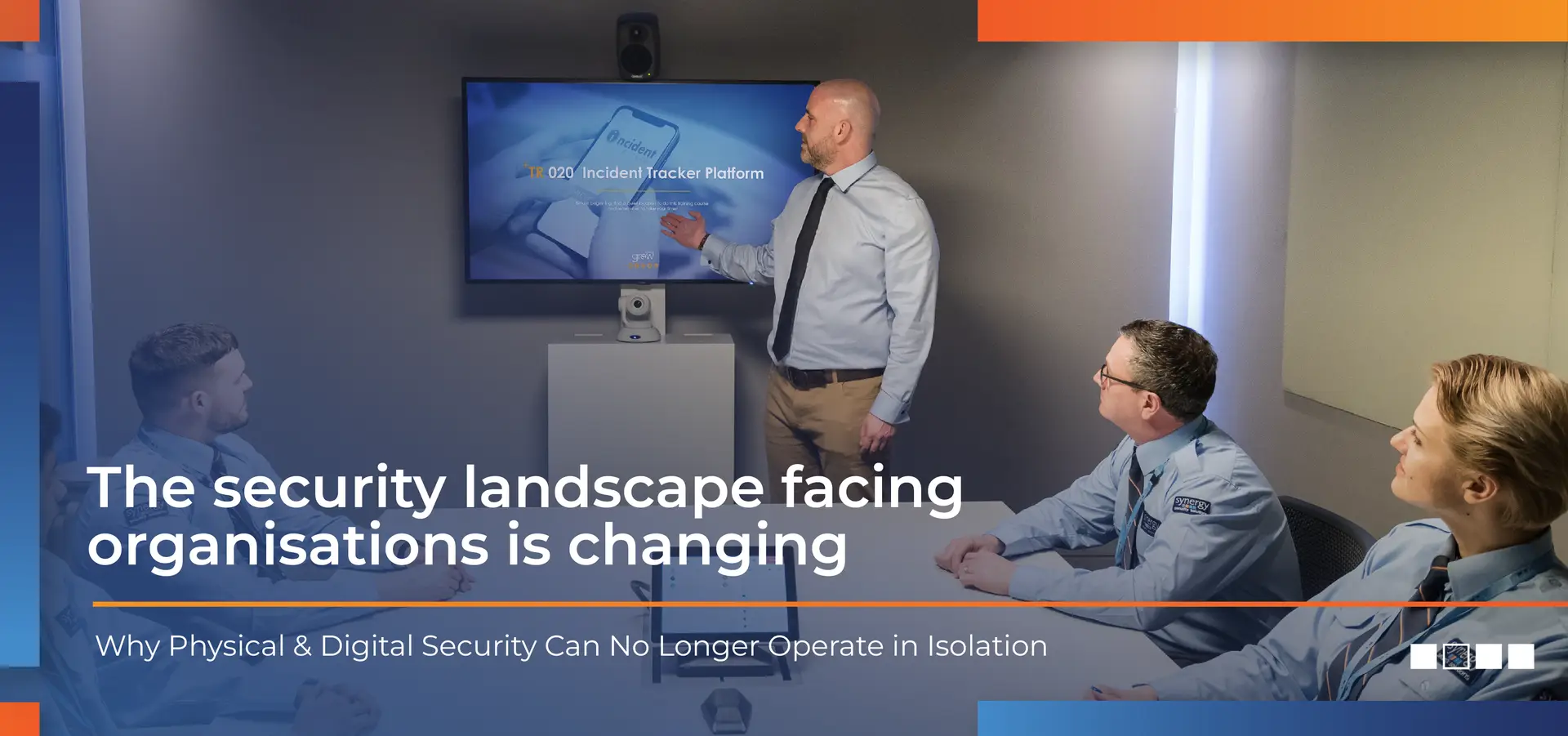
The security landscape facing organisations is changing.
For many years, physical security and cyber security were treated as two largely separate disciplines.
One protected buildings, people and physical assets.
The other protected networks, systems and information.
Today, that distinction is becoming increasingly difficult to maintain.
Modern organisations depend on interconnected technology, communications, access control systems, cloud platforms, operational technology and complex supply chains. At the same time, the physical environments supporting those systems remain dependent on people, procedures and effective security controls.
A disruption in one area can quickly create consequences somewhere else.
A More Complex Risk Environment
The National Cyber Security Centre's National Cyber Risk Assessment highlighted the evolving threat environment facing Ireland, including cybercrime, sophisticated state-linked activity and the potential for disruption to spread across interconnected sectors.
Energy, transport, healthcare, financial services and digital infrastructure are increasingly dependent upon one another.
That interdependency changes the way organisations need to think about security.
A cyber incident may ultimately create a physical security challenge.
A physical breach may provide access to sensitive systems or infrastructure.
A communications failure can affect an organisation's ability to coordinate its response.
And disruption to a critical supplier can quickly become an operational problem for customers further along the supply chain.
Security therefore needs to be considered as part of a much wider organisational risk picture.
Physical Security Still Matters
As organisations invest heavily in technology and cyber protection, the importance of effective physical security should not be underestimated.
Buildings, data centres, laboratories, manufacturing facilities, offices, utilities and other critical environments still require appropriate controls around who can enter, what they can access and how unusual activity is identified and escalated.
Security Officers are often one of the first lines of defence.
Their role increasingly extends beyond traditional guarding.
They observe.
They verify.
They challenge.
They report.
And when something is wrong, they provide the human judgement required to escalate and respond.
People + Technology
Technology is transforming the capabilities available to modern security operations.
Digital patrol management can provide verification that critical areas have been inspected.
Workforce management systems can confirm that trained personnel are deployed where required.
Mobile technology can provide real-time visibility of patrol and response resources.
Incident management platforms allow information, photographs and reports to be captured and communicated quickly.
And 24/7 Control Room operations provide a central point through which information can be assessed, escalated and acted upon.
But technology alone does not create security.
The real value comes from connecting technology with trained people and effective operational procedures.
Breaking Down the Silos
One of the most important developments in modern security and resilience is the move away from isolated risk disciplines.
Security.
Cyber.
Health & Safety.
Business Continuity.
Facilities Management.
Emergency Planning.
IT.
Operations.
Each has its own responsibilities, but during a significant incident they may all become part of the same response.
Organisations therefore need clearly defined communication and escalation structures so that information identified by one part of the business reaches the people who need to act upon it.
A Security Officer noticing unusual activity may be identifying the first indication of a much larger problem.
The effectiveness of the organisation's response depends on what happens next.
Security as Part of Organisational Resilience
Ireland and the European Union are placing an increasing emphasis on the resilience of organisations providing important and essential services.
The direction is clear.
Organisations are being encouraged to understand their risks more comprehensively, strengthen their resilience and ensure they are capable of responding when disruption occurs.
For security providers, this means our role must continue to evolve.
At Synergy Security Solutions, we believe effective security comes from bringing together people, technology, intelligence, operational management and 24/7 support.
Our responsibility is not simply to provide a physical presence.
It is to help our customers identify risk, protect their operations and ensure that when something happens, the right information reaches the right people at the right time.
Looking Ahead
As we enter 2026, organisations will continue to face a security environment that is more interconnected, technology-dependent and complex than ever before.
The organisations best positioned to manage that environment will be those that stop looking at individual threats in isolation.
Because the future of security isn't simply physical.
And it isn't simply digital.
It is connected.
People. Technology. Intelligence. Resilience.