Skip to content

October 7, 2026

The Emergency Checklist: Why Every Item Matters When the Unexpected Happens

Security In Ireland


Share:

Emergencies rarely arrive at a convenient time.

A severe storm, flooding, a prolonged power cut, disruption to water supplies, damage to transport networks or another unexpected event can quickly turn everyday essentials into things we can no longer take for granted.

The Irish Government’s “Be Emergency Ready” guide recommends keeping a small supply of essential items at home so that households can cope if services such as electricity, water, communications or transport are temporarily disrupted. Importantly, the guide does not suggest that people need to prepare for every possible disaster. Its message is much simpler: having a few essentials ready can make a difficult situation considerably safer and easier to manage.

But why these particular items?

Here is the science and practical reasoning behind the checklist.

Water: the first essential

The checklist begins with perhaps the most important item of all: water.

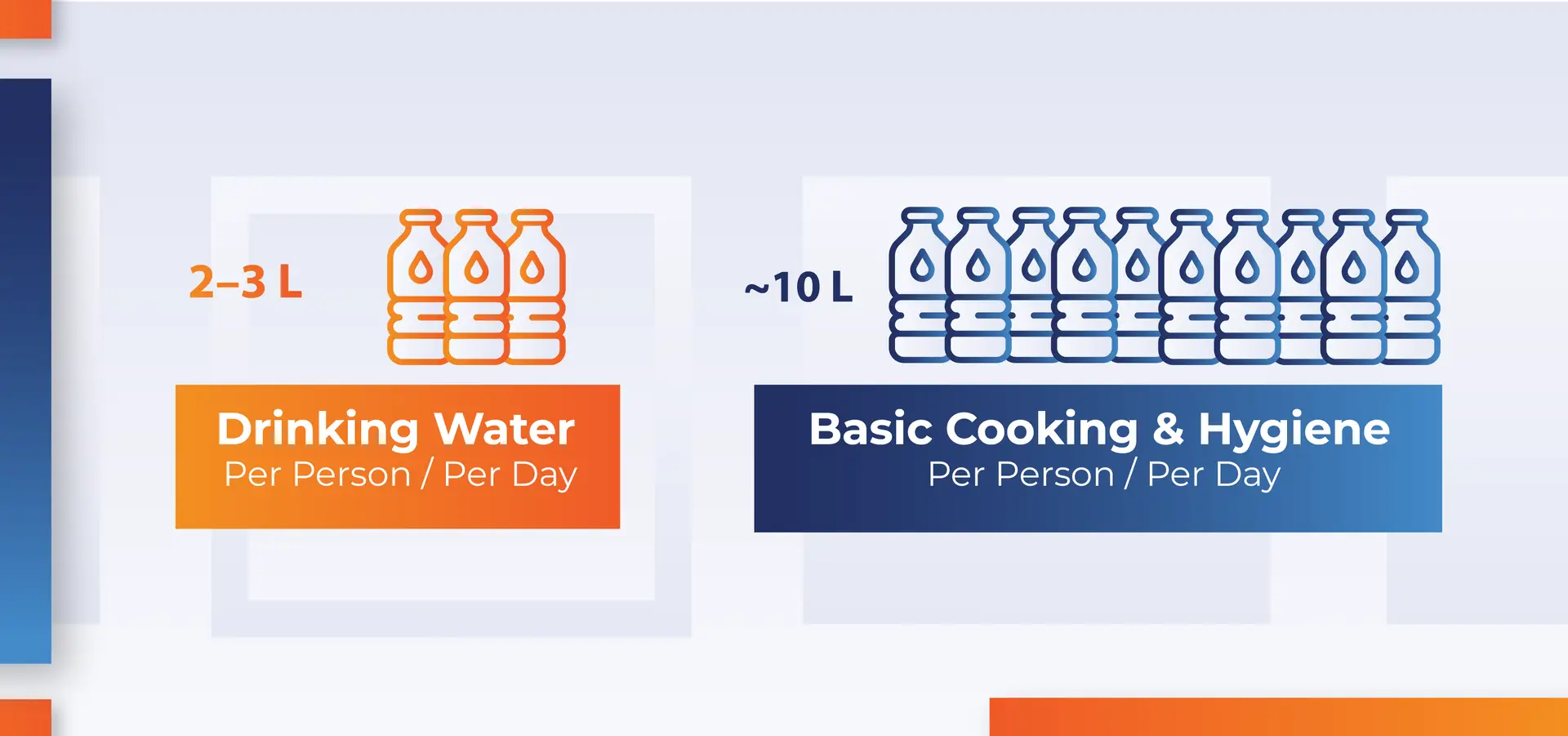
The Irish Government recommends allowing 2-3 litres of drinking water per person per day, & keeping bottled water stored somewhere cool & dark.

That amount is not excessive when you consider what water does inside the body. Water is essential for maintaining blood circulation, regulating body temperature, transporting nutrients & removing waste. A scientific review published through the National Institutes of Health describes water as a critical nutrient & notes that humans can survive without it for only days.

There is no scientifically reliable “you can survive exactly X days without water” figure. Survival depends heavily on temperature, activity, illness, age & how much water is being lost through sweating, vomiting, diarrhoea or urination. What is clear is that severe dehydration can become life-threatening rapidly.

As dehydration progresses, the consequences extend far beyond thirst. Severe fluid loss can reduce circulating blood volume, impair kidney function & cause neurological problems such as confusion and delirium. In extreme cases, dehydration can progress to shock, organ failure & death.

Why 2–3 litres?

The figure in the Irish checklist is specifically for drinking water, rather than suggesting that this is all the water a household may need for every purpose.

In an emergency, water may also be needed for preparing food, taking medicines, brushing teeth & maintaining basic hygiene. Other emergency authorities therefore recommend storing larger quantities when possible. The UK Government’s emergency preparedness guidance recommends keeping bottled water at home & states that a minimum of 2.5-3 litres of drinking water per person per day is recommended for survival. It also notes that around 10 litres per person per day would provide a more comfortable supply, allowing for basic cooking and hygiene as well as drinking. The amount needed can vary depending on the circumstances, including the length of the disruption, the weather & the needs of individual household members. 

The principle is straightforward: water supplies can fail before people have time to find an alternative.

And there is another reason safe water matters.

What happens if the water becomes contaminated?

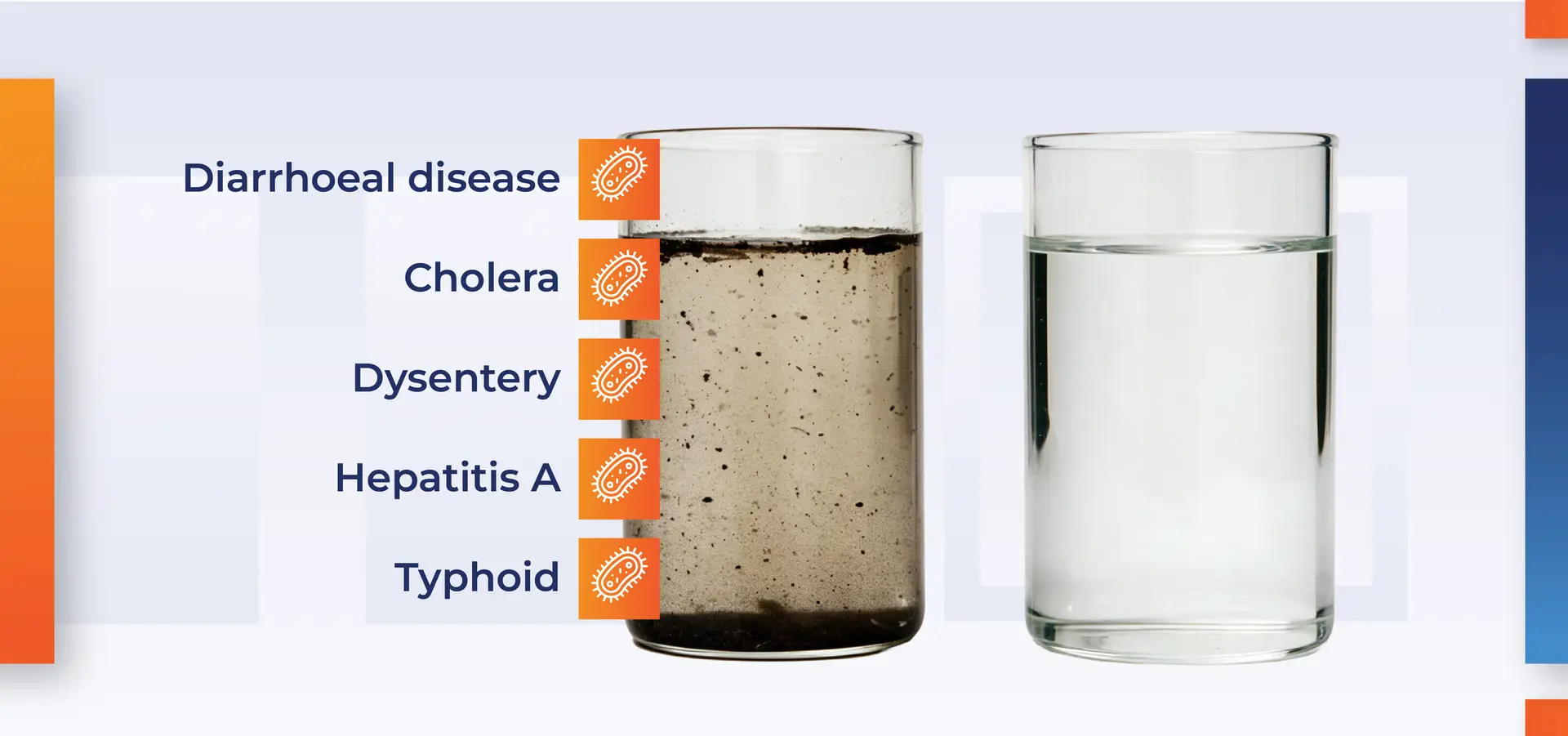
Contaminated water can carry bacteria, viruses & parasites. The World Health Organization links contaminated drinking water with diseases including diarrhoeal illnesses, cholera, dysentery, hepatitis A & typhoid.

Diarrhoea is particularly dangerous during an emergency because it creates a vicious cycle: contaminated water can cause infection, while diarrhoea causes the body to lose even more water & electrolytes. WHO identifies dehydration as the most serious threat associated with diarrhoeal disease.

So bottled water is not simply a matter of comfort. It is a way of protecting the body's most basic physiological needs when normal infrastructure is disrupted.


Food: energy when normal routines stop

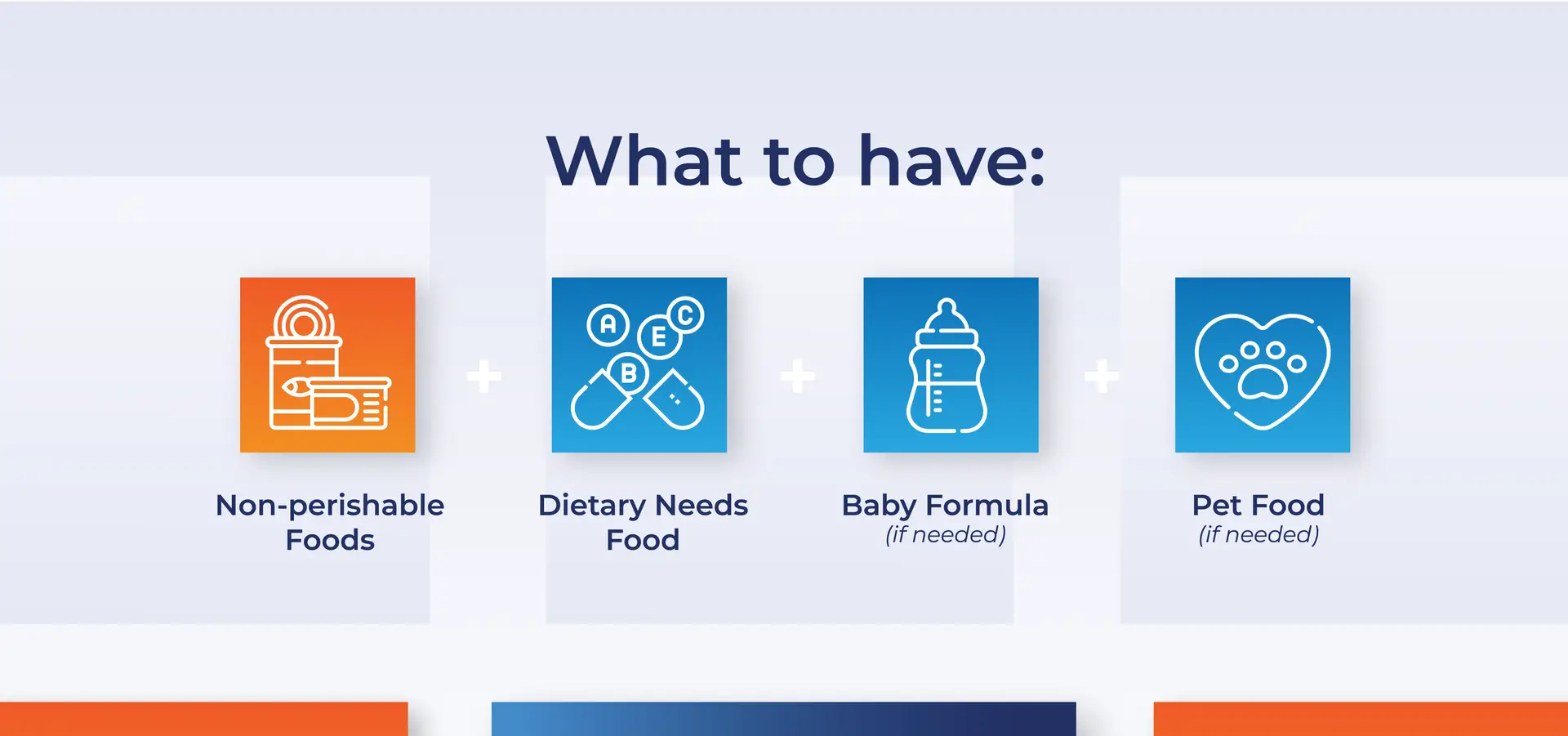
The checklist recommends keeping a supply of non-perishable food, rotating it before it reaches its expiry date & considering the dietary requirements of everyone in the household, including children & pets. It also specifically recommends an additional supply of ready-to-feed formula for households that use baby formula.

Food is often thought of as less urgent than water & biologically, that is true in the immediate term. Humans can survive much longer without food than without water. But that does not make food unimportant during an emergency.

The body needs energy to maintain temperature, move, think & perform basic physiological functions. In a prolonged disruption, adequate food also becomes increasingly important for maintaining physical resilience. The more immediate problem during a power cut, however, may be food safety.


Your refrigerator does not stay safe indefinitely

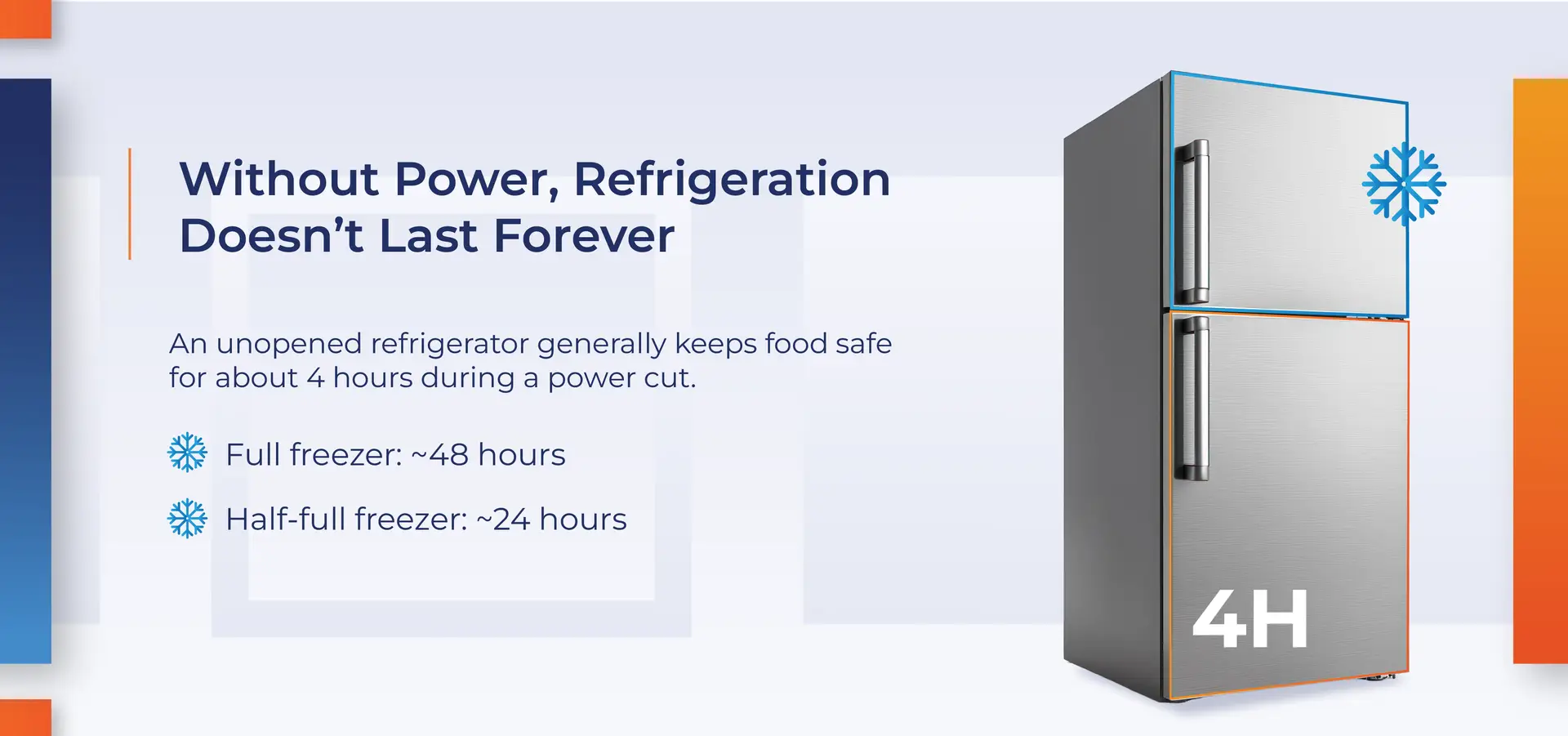
According to the CDC, an unopened refrigerator can keep food safe for approximately four hours during a power outage. A full freezer can generally maintain safe temperatures for about 48 hours, while a half-full freezer may do so for approximately 24 hours, provided the door remains closed.

This is why the Irish checklist recommends using fresh food & refrigerated food first. Once refrigeration is lost, foods such as meat, fish, milk, eggs & leftovers can become unsafe.

And there is an important warning: you cannot reliably determine whether food is safe simply by smelling or tasting it. Foodborne pathogens may be present without producing an obvious change in appearance, smell or taste.

Non-perishable food therefore provides something extremely valuable during an emergency: food that does not depend on electricity, refrigeration or frequent shopping trips.

Light & heat: staying warm when the power goes out

The checklist groups together two things that are easy to underestimate until they disappear: light and heat.

It recommends blankets, sleeping bags & emergency thermal blankets, as well as a torch or lamp with spare batteries. It also advises households to know where their gas & electricity shut-off points are & how to use them safely.

Why is warmth so important?

The human body works hard to keep its internal temperature within a narrow range. If the body loses heat faster than it can produce it, core temperature can fall. This can lead to hypothermia, a potentially life-threatening medical emergency.

The CDC notes that hypothermia can occur not only in extremely cold conditions but also in relatively cool conditions when someone is wet from rain, sweat or cold water. Early symptoms can include shivering, exhaustion & confusion, progressing to drowsiness & other serious neurological effects. This makes something as ordinary as a blanket an important piece of emergency equipment.

Why keep a torch & spare batteries?

A power cut does more than switch off the lights.

Darkness increases the risk of falls, makes stairs & obstacles harder to navigate & can make it difficult to find medicines, first-aid supplies or emergency equipment. A torch also allows people to move around without relying on candles or open flames. The checklist nevertheless includes matches or a lighter, provided they are stored safely. The key lesson is that light is not just about convenience. It is about maintaining safe movement & basic independence when electricity is unavailable.

Medicine: when pharmacies & healthcare may be harder to reach

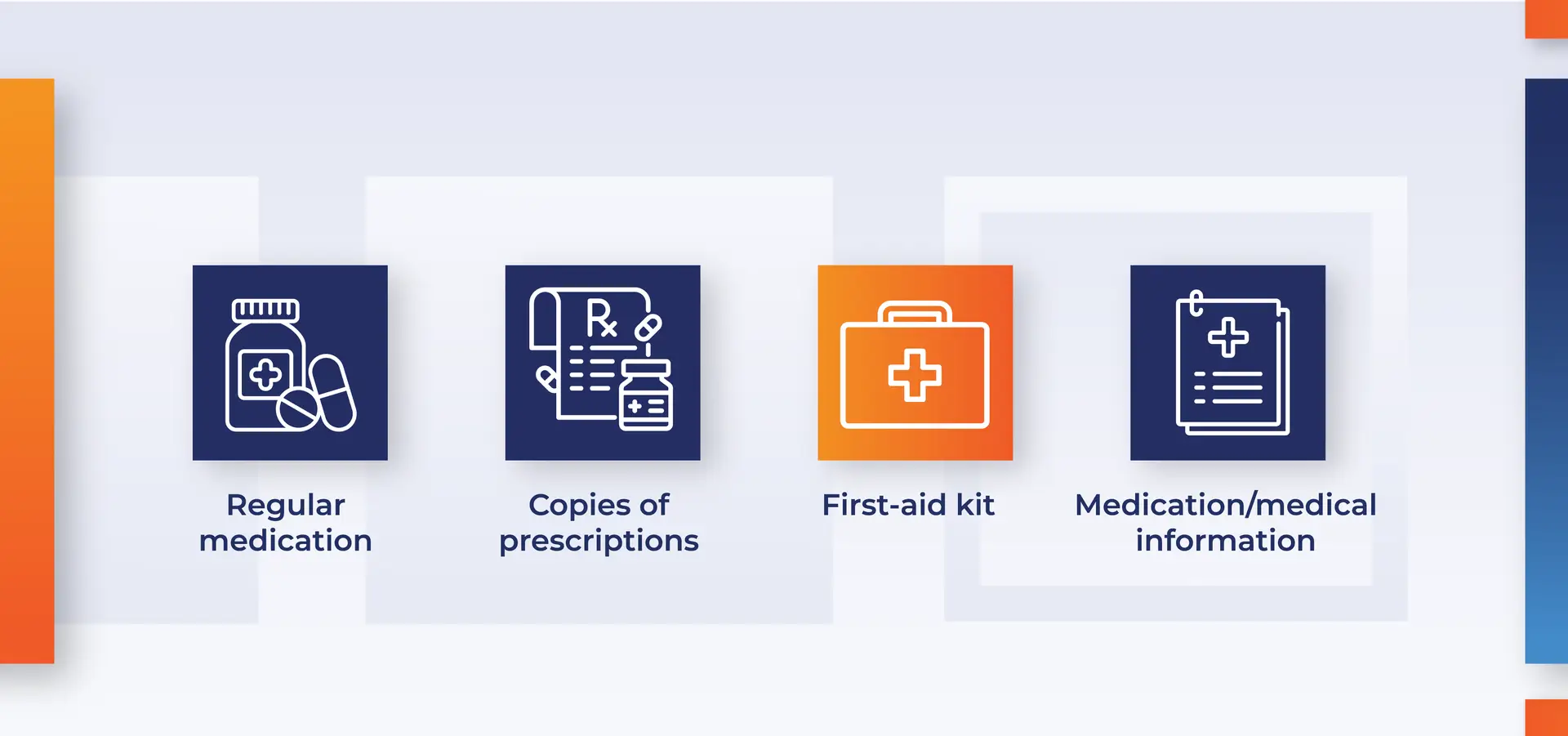
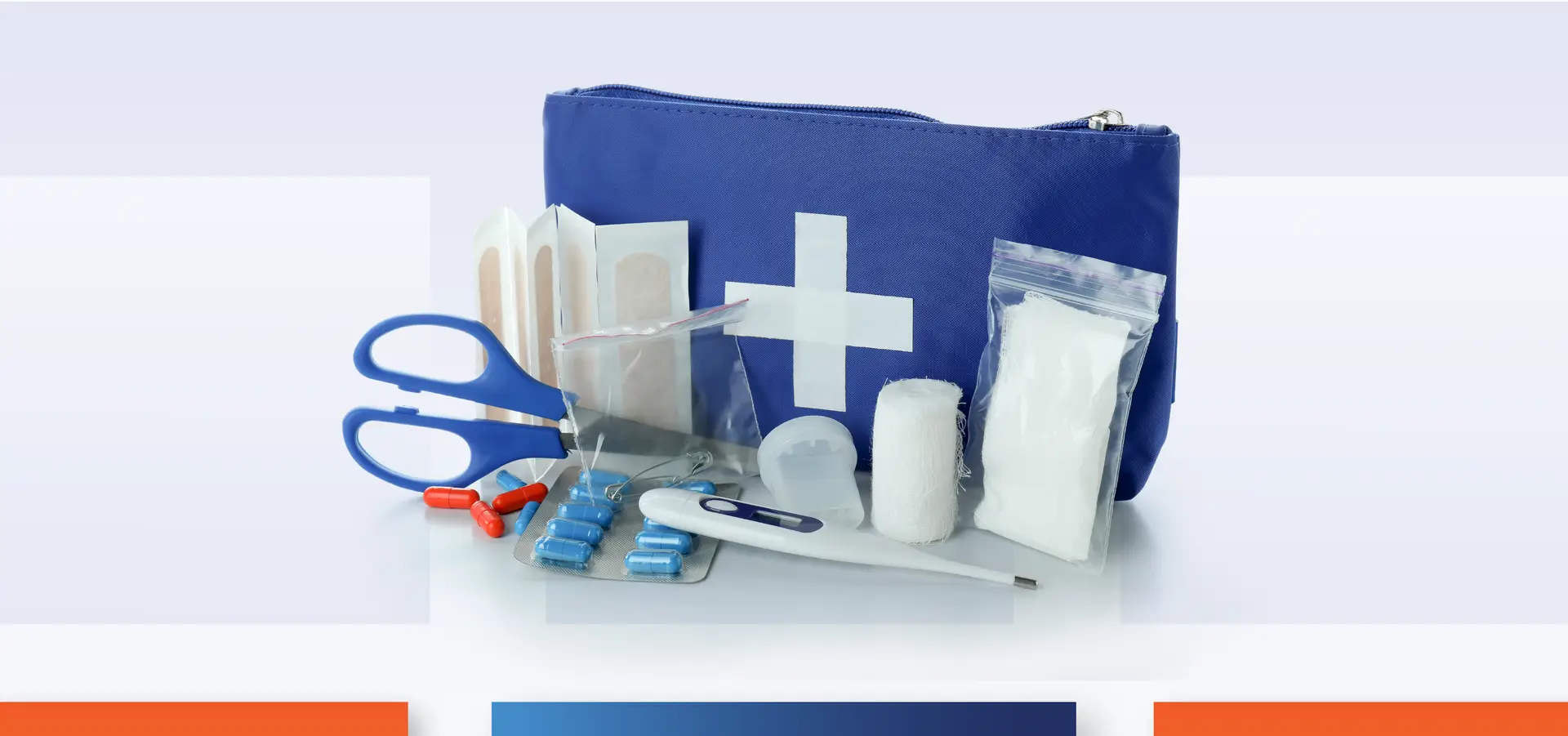
Emergencies can disrupt more than electricity & water. Road closures, severe weather, transport problems or damage to local infrastructure can make it difficult to reach a pharmacy, GP or hospital. The checklist therefore recommends keeping prescription medicines up to date, retaining copies of prescriptions & medical information, & having a first-aid kit ready.

For someone who takes regular medication, this can be particularly important.

The World Health Organization specifically highlights the need to maintain continuity of care for people living with chronic conditions during emergencies. Disruptions can restrict access to essential medicines & worsen existing health conditions. A written medication list can also become extremely useful if someone has to leave home unexpectedly or receives medical assistance from someone who does not normally care for them.


The first-aid kit

A first-aid kit is not intended to replace professional medical care. Its purpose is to provide basic supplies for dealing with minor injuries while waiting for assistance or when access to normal healthcare is temporarily disrupted. During an emergency, even small injuries can become more difficult to manage if pharmacies, shops or medical services are inaccessible.


Hygiene: the part of preparedness people often overlook

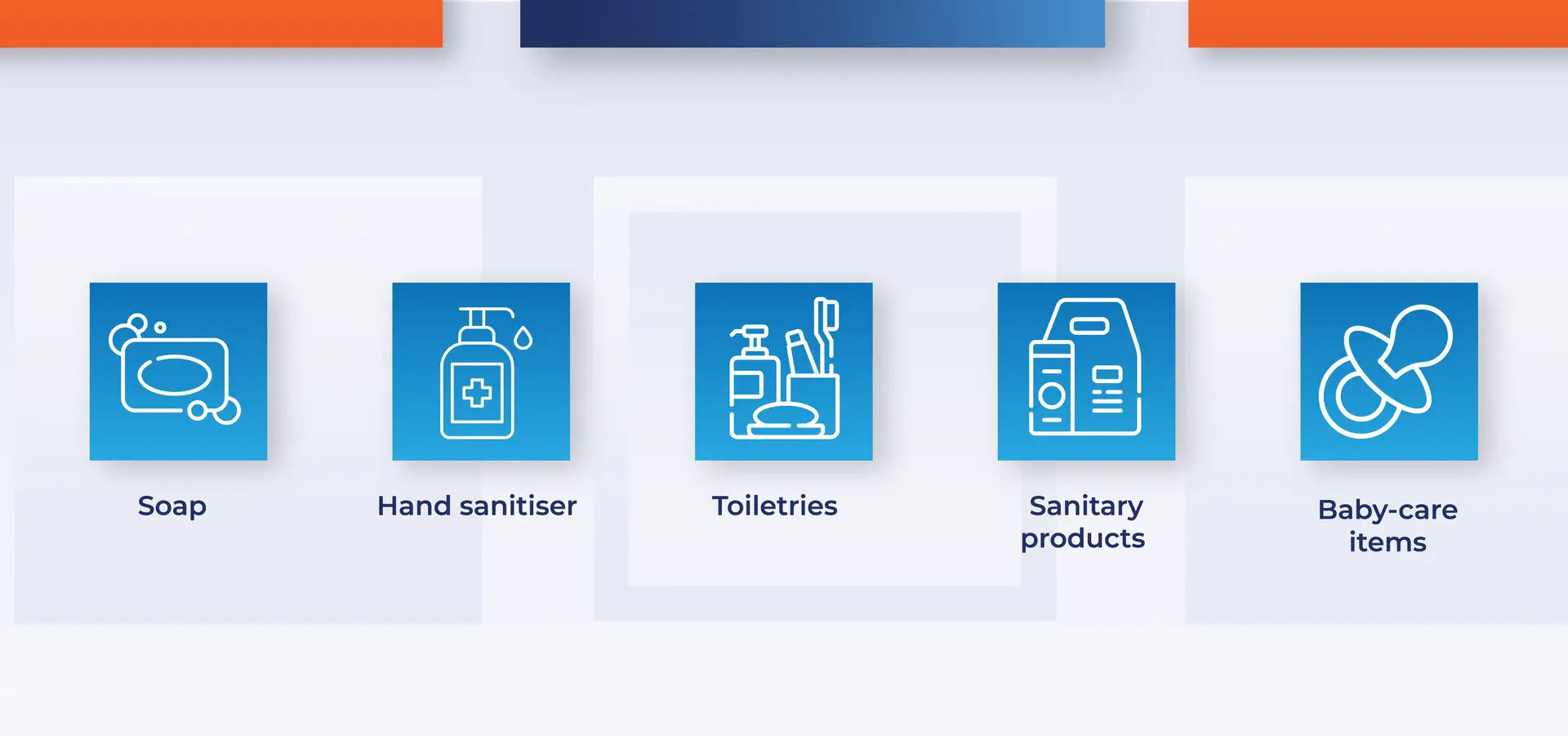
It is easy to focus on food, water & warmth while forgetting another essential: hygiene. The checklist recommends keeping sanitary & hygiene products suitable for everyone in the household. That includes thinking beyond generic supplies. Different households may need sanitary products, nappies, baby-care items, toiletries or other personal hygiene products.

Why does this matter medically?

Because hygiene is one of the barriers that prevents infectious disease from spreading. The CDC describes handwashing with soap & clean running water as one of the best ways to prevent the spread of disease, including diarrhoeal & respiratory infections. When soap & water are unavailable, hand sanitiser containing at least 60% alcohol can be used in appropriate situations. This becomes particularly important during emergencies because sanitation & clean water may be compromised.

WHO notes that contaminated water, inadequate sanitation & poor hygiene are closely associated with diarrhoeal disease. So hygiene supplies are not simply about staying comfortable or clean.

They are part of infection control.


If you need to evacuate: take what keeps you functioning

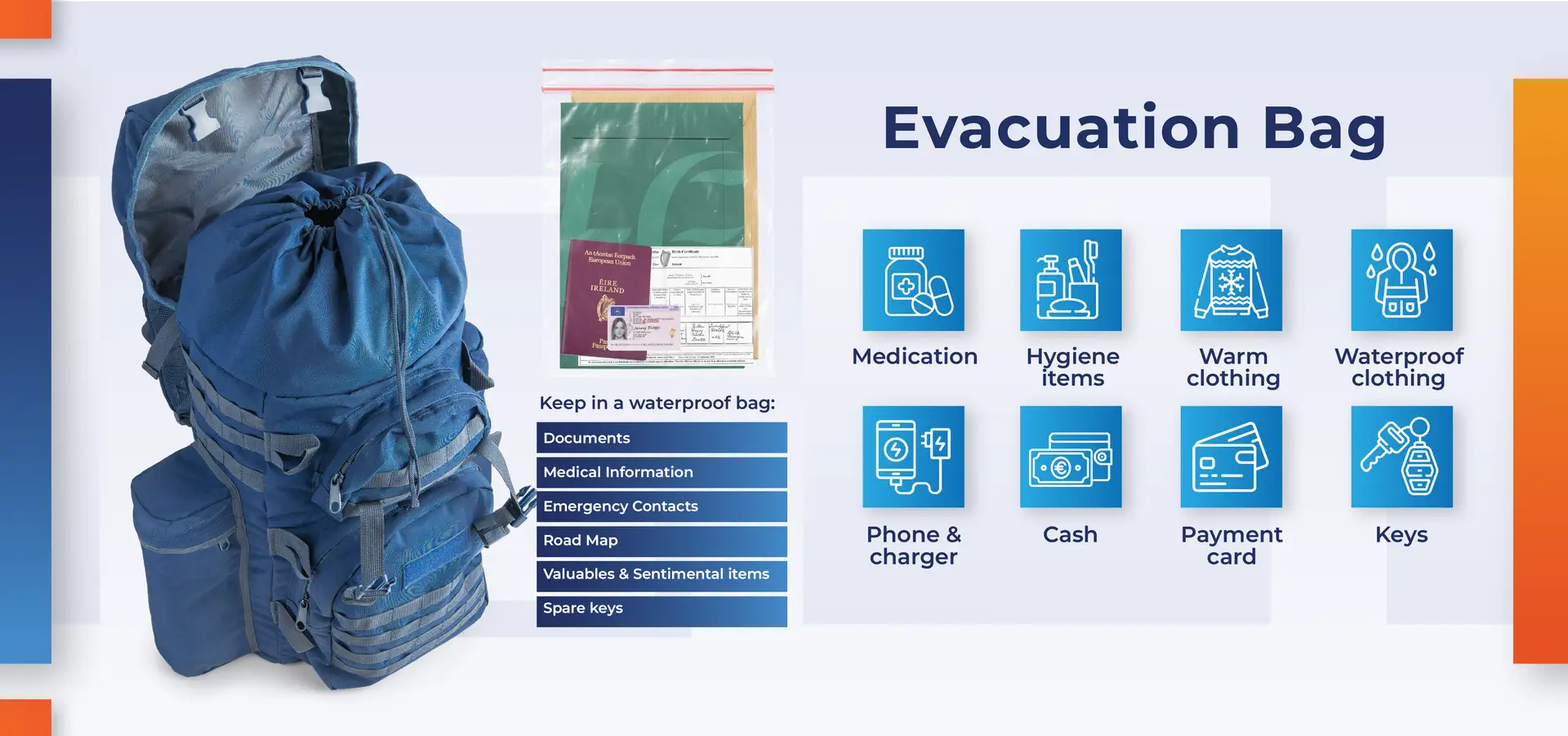
The checklist also considers the possibility that staying at home may no longer be the safest option. If evacuation becomes necessary, it recommends taking medication &  hygiene items, warm & waterproof clothing, a mobile phone with charger, identification & key documents,  cash & payment cards where possible.

This list reflects a simple principle:

An evacuation can turn a household supply problem into a mobility problem.

You may no longer have access to everything you have stored at home. What you carry with you therefore needs to support your immediate health, identification, communication & basic needs. Warm, waterproof clothing protects against exposure. Medication protects continuity of treatment. A charged phone provides communication. Identification & important documents can help establish who you are & access services. It is also worth keeping these items together or knowing exactly where they are. In an evacuation, there may not be time to search through cupboards & drawers.


Stay connected: information is an emergency resource

The checklist recommends having a battery, wind-up or solar-powered radio with spare batteries, or using a car radio as a backup. It also recommends keeping power banks available to recharge phones.

At first glance, a radio might seem less important than food or water. But information can change what people do. During a major emergency, authorities may issue instructions about evacuation, flooding, road closures, weather conditions, shelter locations, utility problems or other hazards. A phone is extremely useful, but it depends on several systems working: battery power, telecommunications infrastructure & in many cases, internet connectivity.

A battery or wind-up radio provides an alternative route to information.

That is why emergency preparedness is not simply about storing physical supplies. It is also about maintaining access to reliable information.

Important items: protecting the things you cannot easily replace

The final part of the checklist focuses on items that might not keep you alive in the immediate sense, but can make recovery much easier.

The Irish Government recommends keeping important documents in a waterproof bag, including birth certificates, passports, driving licences, insurance information, medical information & emergency contacts. It also suggests strong plastic bags for valuables & sentimental items, a road map in case GPS is unavailable, spare keys for the home & car.

Why a waterproof bag?

Because emergencies such as flooding can damage paper documents extremely quickly. Losing identification, insurance information or medical records can create additional problems after the immediate emergency has passed. 

The road map is another example of redundancy,  having a backup when technology fails. GPS is incredibly reliable in everyday life, but electronic navigation depends on powered devices & functioning systems. A physical map does not need a battery or mobile signal.

The same principle applies to spare keys. A small item that costs very little can become extremely valuable if the original keys are lost during an evacuation.

The bigger lesson: preparedness is about buying yourself time

The most important feature of this checklist is not any individual item. It is the time it creates.

  • If the electricity goes off, you have light.

  • If the heating stops, you have a way to stay warm.

  • If shops are closed, you have food.

  • If the water supply is disrupted, you have drinking water.

  • If you need to leave, you already know where your documents & medication are.

  • If mobile networks or internet access become unreliable, you have another way of receiving information.

That is what emergency preparedness really means.

It does not mean predicting exactly what will happen. It means reducing the number of problems you have to solve at the same time.

A small amount of preparation can make a big difference

The Irish Government's own guidance makes an important point: you do not have to build the perfect emergency kit overnight. Supplies can be built up gradually & stored somewhere safe & dry. Start with water. Then add non-perishable food. Add a torch & spare batteries. Check your medicines. Put important documents somewhere waterproof. Make sure everyone in the household knows where these things are. Preparedness is not about expecting the worst. It is about making sure that, if the unexpected happens, you & the people around you have a little more time, a little more control & a much better chance of staying safe.

Read the full Government guidance: Be Emergncy Ready Booklet