
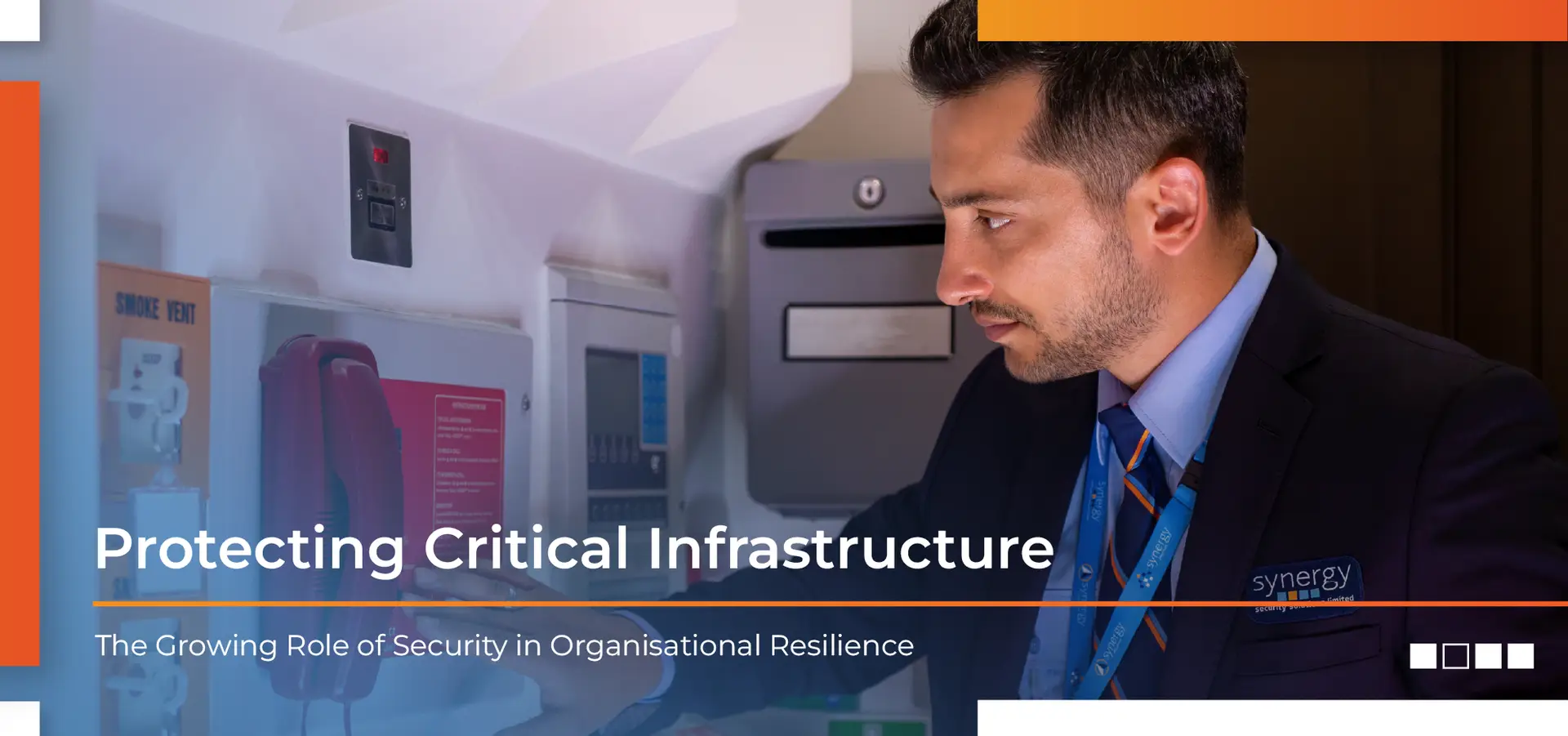
Recent events across Ireland have once again highlighted the importance of protecting critical infrastructure and maintaining essential services during periods of disruption.
During April, disruption affecting fuel distribution and access to critical infrastructure resulted in a coordinated response involving Government departments, An Garda Síochána and contingency planning involving the Defence Forces.
While individual events may be temporary, they highlight a much broader challenge for organisations:
What happens when normal operations are disrupted?
For organisations responsible for essential services, major facilities, supply chains or critical operations, security must increasingly be considered as part of the wider resilience and business continuity strategy.
Security Beyond the Building
Traditionally, physical security has often focused on protecting a defined location, controlling access, preventing unauthorised entry and protecting people and property.
Today's risk environment requires organisations to think more broadly.
Disruption at one location can have consequences across an entire operation. Restricted access to a facility can affect employees, suppliers and customers. An incident affecting transport or energy infrastructure can quickly impact organisations far removed from the original event.
The role of security therefore extends beyond protecting a building.
It is about helping organisations maintain control, protect critical operations and respond effectively when circumstances change.
Preparing for Disruption
Effective resilience starts before an incident occurs. Organisations should understand which locations, assets, people and activities are critical to their operations and consider how these would be protected during a significant disruption.
From a security perspective, this can include contingency arrangements for additional guarding resources, access and perimeter management, mobile patrols, keyholding and alarm response, incident reporting, escalation procedures and 24/7 operational support.
Just as importantly, organisations need clearly established communication and decision-making structures. When an incident develops quickly, knowing who is responsible, who needs to be informed and what action should be taken can significantly improve the effectiveness of the response.
Ireland's Focus on Critical Entity Resilience
These considerations are becoming increasingly important as Ireland develops its approach to the resilience of critical entities.
The National Strategy on the Resilience of Critical Entities 2026–2029 forms part of Ireland's implementation of the Critical Entities Resilience framework and focuses on strengthening the resilience of organisations responsible for essential services.
The framework recognises that resilience requires organisations to consider a wide range of measures, including risk management, physical protection, incident response, business continuity, employee security and training.
This represents an important shift.
Security, emergency planning and business continuity cannot operate independently of one another.
Resilience depends on how effectively they work together.
The Role of Technology
Technology also provides security teams with significantly greater operational visibility than was previously possible.
Real-time workforce management, GPS-enabled mobile operations, digital patrol verification, incident reporting and centralised monitoring can provide organisations with a much clearer picture of what is happening across their locations.
For Synergy, these systems work alongside our people and our 24/7 Control Room, providing another layer of operational oversight and supporting communication, escalation and response when circumstances change.
Technology does not replace experienced security professionals.
It gives them better information with which to make better decisions.
Building Resilience Before It Is Needed
Major incidents rarely occur at a convenient time.
For organisations operating critical facilities and complex environments, the ability to respond effectively cannot be created after disruption has already begun.
Plans need to be developed, responsibilities need to be understood, resources need to be available, procedures need to be tested, and organisations need security partners capable of adapting when the operating environment changes.
At Synergy Security Solutions, our approach combines people, technology, risk management, mobile security and 24/7 operational support to help our customers protect their people, assets and operations.
As the security landscape continues to evolve, our focus remains on helping customers move beyond simply reacting to incidents towards building operations that are genuinely prepared for them.
Security protects what matters. Resilience keeps it operating.
Protecting People. Protecting Business. Supporting Resilience.