
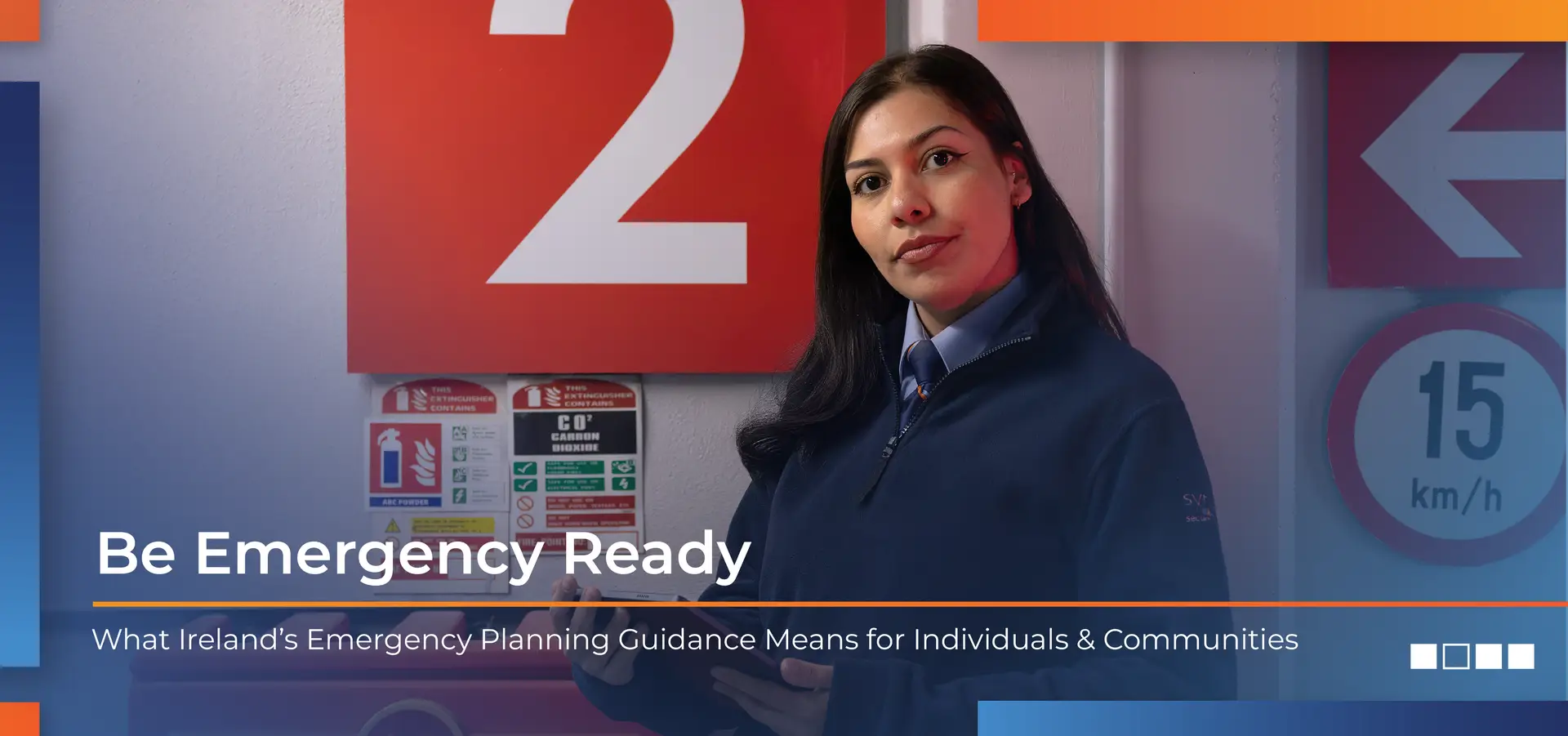
Emergencies can happen at any time. While major emergencies may be uncommon, Ireland’s Office of Emergency Planning (OEP) is encouraging individuals, households & communities to take practical steps to prepare for situations where essential services may be disrupted.
The message is straightforward: preparation should happen before an emergency occurs, not during it.
The Department of Defence’s Office of Emergency Planning published its Be Emergency Ready booklet on behalf of the Government Task Force on Emergency Planning, with support from Local Government Ireland. The booklet provides practical guidance on preparing for a range of emergency situations & encourages people to consider how they would manage if everyday services such as power, water, communications or transport were disrupted.
Three steps to being emergency ready
The OEP's guidance is built around three simple steps:
Be aware. Make a plan. Stay connected.
The first step is understanding the risks that could affect you & your household. The guidance identifies potential emergencies including storms, flooding, cyber attacks & disruptions to critical supply chains & encourages people to consider how these risks could affect their home, town or city.
The second step is having a plan. The OEP recommends using its checklist to prepare for an emergency & keeping important information accessible. This includes details of regular medication, important telephone numbers & documents, as well as arrangements for keeping animals safe.
The guidance also recommends maintaining an adequate supply of essential items. As the booklet notes, “Some preparation is better than no preparation at all.”
The third step is staying connected. The OEP encourages people to maintain contact with family, friends & neighbours & to consider how communities can work together and share information & resources during an emergency. It also recommends keeping up to date through local radio & considering basic first-aid training.
Preparing for disruption
One of the most practical aspects of the guidance is its focus on the possibility that normal services may not be available.
The checklist covers basic supplies such as drinking water & non-perishable food, as well as alternative ways to provide light & heat. It also recommends keeping torches, spare batteries, power banks & a battery, wind-up or solar radio available.
The guidance recommends keeping important documents, including identification, insurance details, medical information & emergency contacts somewhere safe, with a resealable waterproof bag suggested for document storage.
These are simple measures, but they reflect an important principle of emergency preparedness: having the right information & resources available before disruption occurs can make it easier to respond when circumstances change.
What happens if you need to leave?
The OEP also addresses situations where people may need to leave their home or business.
The guidance recommends identifying in advance what would need to be taken, keeping important documents accessible & maintaining a written plan. This can be particularly important where phones, internet access or electricity may not be available.
It also stresses the importance of following instructions from emergency services & local authorities & staying informed about developing conditions where possible.
For emergencies in Ireland, the booklet confirms that the emergency numbers are 112 or 999. It also recommends that members of a household know their Eircode, which may be important when communicating a location to emergency services.
Preparedness is also about community
The guidance goes beyond individual preparation.
The OEP highlights the importance of communities supporting people who may need assistance during an emergency. This can include checking in with family members, neighbours or friends where it is safe to do so, particularly where someone may be isolated or vulnerable.
This community element is an important part of the wider emergency planning approach in Ireland. The Office of Emergency Planning supports the Government Task Force on Emergency Planning & coordinates emergency planning arrangements across Government & with key public authorities.
Prepared before it is needed
For organisations operating in security & resilience, the principles outlined in the OEP's guidance are familiar: understand potential risks, plan in advance, maintain access to essential information & resources & know how to respond when normal arrangements are disrupted.
The Be Emergency Ready campaign is aimed at individuals & households, but its central message is broader.
Preparedness is about taking practical action before an incident occurs.
As the OEP puts it, “Do what you can” recognising that even relatively simple preparations can help people manage when essential services are disrupted.
At Synergy Security Solutions, we recognise the importance of preparedness as part of maintaining safe & resilient environments. Understanding potential disruption & having appropriate plans & procedures in place are important elements of being ready to respond when circumstances change.
The full Be Emergency Ready booklet is available through the Irish Government’s official website & provides a practical checklist and further guidance for households and communities.
Read the full Government guidance:
Be Emergency Ready – Office of Emergency Planning